Short answer: use outsourcing for speed-critical specialty roles, upskilling for your existing workforce, and recruiting to hire skilled trades for the long term. You’ll often use these tactics in combination. In this article, we’ll tell you how.
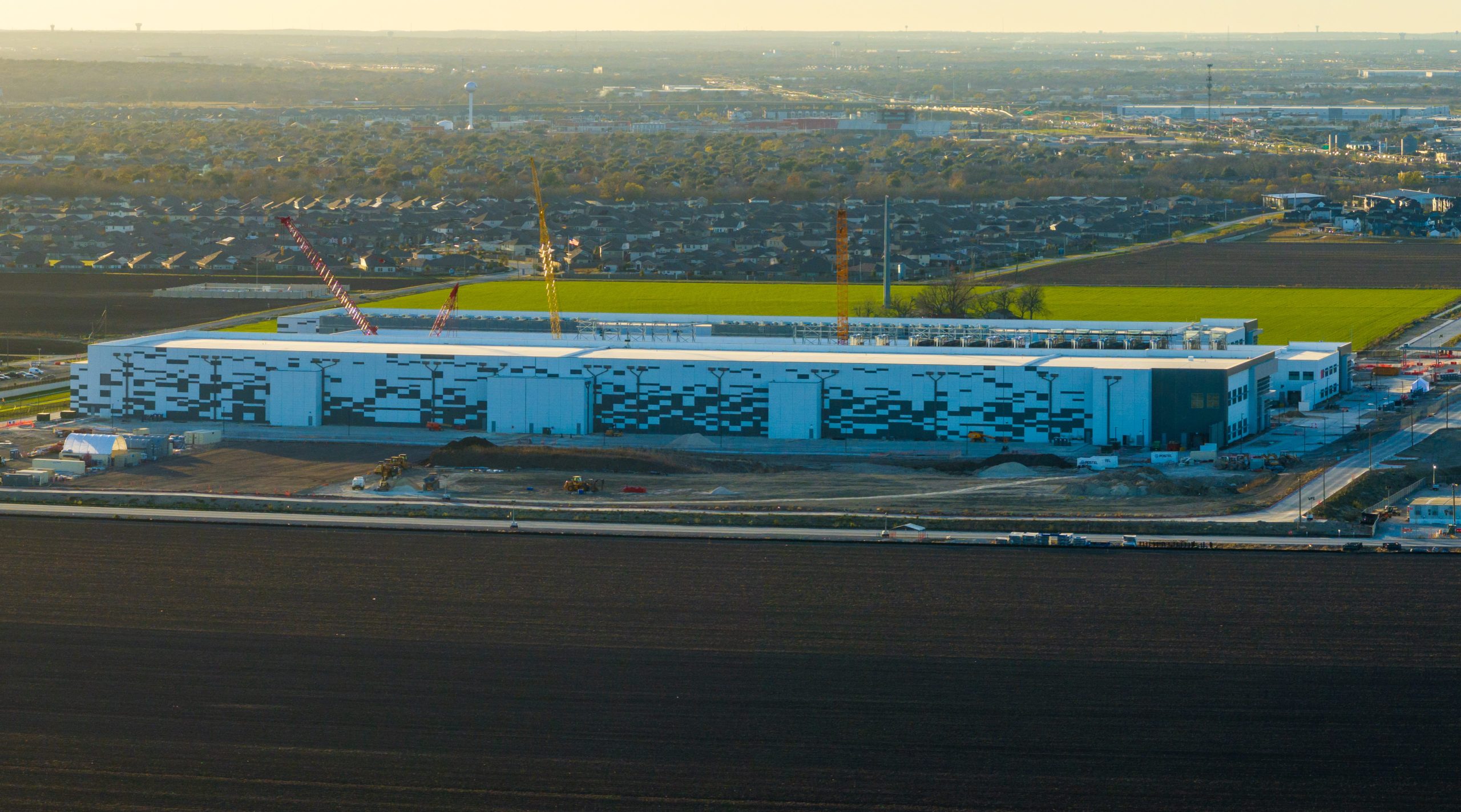
In our nearly 85 years in business, we’ve never seen as high a demand for construction labor as recent data center projects require. Tens of billions of dollars from Amazon, Google, Microsoft, Meta, and other companies are flooding North Texas, all part of a race to build the biggest, most powerful data centers the fastest.
But the current workforce isn’t geared to handle this level of demand. Which leaves construction firms, manufacturers, and other companies in a lurch when hiring skilled tradespeople. That’s part of the reason the majority of our current engagements are related to a North Texas data center project.
If your company has just won a contract that’s part of a data center build, or you’re writing an RFP right now, you’re probably looking at options to ramp up your skilled trades without amplifying risk. In this article, we’ll compare outsourcing vs. upskilling vs. recruiting on speed, cost, quality control, risk, and long-term value, so you can see how to integrate each tactic into your strategy.
Key Takeaways
- Outsourcing, upskilling, and recruiting are complementary staffing strategies. The companies who are efficient in staffing data center projects are deploying all three in concert, matched to the right roles and project phases.
- The skilled trades labor shortage isn't a temporary blip in the market. Retirements are outpacing new entrants, competition for available talent is intensifying, and project timelines can't wait for a slow hiring process.
- A staffing partner with deep local relationships and a pre-vetted talent database will consistently outperform a traditional job posting process. This is especially true for the specialized trades roles that data center builds demand most.
How Do Outsourcing, Upskilling, and Recruiting Work for Hiring Skilled Trades?
When you face a skilled trades shortage on a data center build, you have three levers to pull. Let’s walk through how each one works before we talk about the best ways to deploy them effectively.
Outsourcing: Finding a Skilled Trades Consultancy
Outsourcing means contracting with an outside firm that supplies workers, manages labor, and takes on much of the associated risk. In the skilled trades, this typically looks like partnering with a specialty subcontractor or trades consultancy that brings its own crew to your project.
Usually, this approach is best in situations like the following:
- You need a highly specialized skill set that doesn't exist on your team
- Your project phase is time-sensitive and you can't afford a long lead time for hiring
- Your project's scope is clearly defined enough to hand off individual components to an outside firm
For data center builds, outsourcing is common for specialized electrical, low-voltage, and commissioning work where the expertise gap is too large to close quickly.
However, there's a tradeoff. Outsourcing tends to be more expensive on a per-hour basis, and you have less direct control over quality standards and workforce continuity.
Upskilling: Training Current Workers to Handle More Complex Tasks
Upskilling involves investing in your existing workforce to expand what they're capable of doing. In the skilled trades, this could mean taking a journeyman electrician and training them on data center-specific systems, or cross-training a mechanical tech on CRAC units and cooling infrastructure.
This approach works best when:
- You have a reliable core workforce that's already bought into your company culture
- You can bridge skill gaps within a reasonable timeframe
- You're thinking about long-term capacity rather than an immediate staffing crunch
Upskilling can also be a powerful retention tool. After all, workers who receive meaningful training are less likely to walk out the door when a competitor comes calling with a higher rate.
However, upskilling takes time. If you need someone qualified to run wire in a hyperscale facility next month, a training program won't source the right person in time.
Recruiting: Partnering with a Skilled Trades Talent Expert
Recruiting (or working with a skilled trades staffing partner) means going to market for new talent, either on a permanent or contract basis.
A staffing partner that specializes in the trades brings an existing network of pre-vetted candidates for you to choose from. This, in turn, can dramatically compress your time-to-hire compared to posting jobs and screening applicants on your own.
The best time to use this approach is when:
- You have a persistent headcount gap
- A recently contracted project requires more work than your current bench can manage
- You need to scale up quickly but don’t want to deal with the overhead of a full internal hiring operation
For data center projects specifically, where competition for skilled trades is aggressive, having a staffing partner with deep local relationships can be the difference between moving a project forward and watching it stall.
Comparing Outsourcing vs. Upskilling vs. Recruiting: What Does Each Do Best?
Each of these three approaches to hiring skilled trades has a distinct advantage. Outsourcing delivers speed and specialized expertise at a premium cost. Upskilling builds long-term internal capacity but requires time you may not have mid-project. Recruiting fills persistent headcount gaps and scales your bench, especially when done through a trades-specific staffing partner who can compress your time-to-hire.
The right move depends on how urgent your need is, how specialized the role is, and how long you'll need that capability:
- Outsourcing works best for highly specialized, time-sensitive roles where the skill gap is too large to close internally and where you need someone to start producing on day one
- Upskilling works best for bridging moderate skill gaps in a loyal, existing workforce, and for building the internal capability you'll need across future projects, not just this one
- Recruiting works best when you have a sustained headcount need, a project pipeline that justifies permanent hires, or a near-term gap that a staffing partner can fill faster than a traditional hiring process
| Outsourcing | Upskilling | Recruiting | |
| Best for | Specialized, time-critical roles | Bridging skill gaps among existing staff | Persistent headcount needs |
| Speed to productivity | Fast | Slow | Moderate |
| Cost | High | Moderate | Moderate |
| Quality control | Low (depending on vendor) | High | High |
| Risk | Transferred to vendor | Retained internally | Shared with staffing partner |
| When to deploy | Specialized phases | Pre-project or between projects | Project ramp-up |
| Long-term value | Low | High | High |
What Are the Biggest Challenges in Hiring Skilled Trades?
Recruiting skilled tradespeople has always been competitive. However, several structural forces shaping the 2026 labor market have made it significantly harder to do so.
Not only has heavy investment into data center construction caused demand to skyrocket, but the supply of critical skilled tradespeople (electricians, HVAC, interior systems installers, and more) is shrinking.
As such, there’s a gap that’s both driving up wages (as our recent Skilled Trades Wage Guide shows), and making it harder to find and place blue collar talent. This is causing the following challenges.
The supply side is shrinking faster than most companies realize
A large cohort of experienced tradespeople (electricians, pipefitters, HVAC techs, low-voltage specialists) are hitting retirement age at exactly the moment when data center construction and infrastructure investment are creating record demand.
And the pipeline of new entrants isn't replacing them fast enough:
- Fewer young workers are choosing trades careers
- Vocational training programs are underenrolled relative to need
- It takes years to develop a journeyman with the experience level that complex builds like data centers actually require
The competition for available talent is intense (and expensive)
The workers who are out there know that we’re in an employee market. And they’re negotiating accordingly.
Large contractors, OEMs, and industrial employers are competing aggressively for the same limited pool of talent as mid-sized and small firms. But since these competitors have the resources to offer attractive sign-on bonuses and benefits packages, it makes it harder for everyone else to match.
However, higher wages and flashy benefits aren’t always enough to guarantee long-term retention. As such, many companies find themselves in a vicious cycle where they go to market again every six months. And as wages rise, each hiring cycle becomes more expensive than the previous one.
Recruiting takes time that project timelines don't always allow
Even when you have a clear idea of who you need to hire and know your local job market, filling specialized trades roles can still take months of outreach, networking, and vetting. For data center projects operating on tight schedules, this is a problem.
This is where having a staffing partner can help. To use Skinner as an example, we’ve spent decades building relationships with and vetting skilled trades talent across the North Texas area. Which means we can skip all the steps that slow internal recruiting efforts down.
How to Choose the Right Approach for Your Company
The right staffing mix depends on your project timeline, your existing workforce, and how much risk you can absorb.
Choose outsourcing if:
- You need a specialized skill set (e.g., commissioning, low-voltage, critical power) that doesn't exist on your current team
- Your timeline is too compressed to hire or train before the work begins
- The scope is clearly defined and can be handed off to a vendor with minimal oversight
- You're willing to pay a premium in exchange for speed and transferred risk
Choose upskilling if:
- You have reliable, experienced workers who are ready to take on more complex work
- The skill gap is real but bridgeable; in other words, the knowledge your team needs is adjacent to what they already know
- You're thinking about the next project, not just this one, and want to invest in capabilities that will stay in-house
- You have enough runway before the work begins to make training worthwhile
Choose recruiting (or a staffing partner) if:
- You've won new work (or expect to) that your current headcount simply can't support
- You have a persistent gap in a role that recurs across projects, making a permanent hire worth the investment
- You need to move faster than a traditional job posting allows, and a staffing partner with an existing trades network can compress your time-to-hire
- You're building toward a stable core team that can anchor future bids and project wins
Use all three if:
- You're scaling rapidly and facing gaps at multiple levels simultaneously: specialized roles, mid-level capacity, long-term bench strength, etc.
- You're managing a large, multi-phase data center build where different phases require different skill profiles
- You want a resilient workforce strategy that doesn't leave you fully exposed when one tactic hits its limits
Final Thoughts on Hiring Skilled Trades Workers
As data center investments in North Texas continue to accelerate, hiring skilled trades is going to get harder before they get easier.
That's where Skinner comes in. We find, vet, and place the right skilled tradespeople (electricians, plumbers, pipefitters, mechanical techs, low-voltage specialists, and more) faster than you could source them on your own:
- Skinner brings a database of over 10,000 qualified, work-ready skilled trades workers in the Dallas-Fort Worth area, a bench built nearly 85 years in the construction industry that most companies simply can't replicate
- Skinner matches candidates not just on skills but on culture fit, placing workers who are motivated to show up and stay, not just take the first better offer that comes along
- Skinner's fast, efficient placement process and easy-to-use client portal mean you can move from need to hire without the weeks of sourcing and screening that eat into your schedule
If your company has just won a data center contract, or is preparing to bid on one, the time to build your recruiting pipeline is now, before the need becomes urgent. Contact us to get started today.
FAQs on Hiring Skilled Trades Workers
What should you look for when vetting a skilled trades worker before hiring?
At minimum, verify active licensure, confirm relevant certifications (OSHA safety training, journeyman status, any trade-specific credentials), and run a thorough background check before placing anyone on a job site. Additionally, it’s important to assess whether the candidate has direct experience with the type of work at hand, as well as culture fit.
How much does it cost to hire skilled trades workers for a construction project?
The cost depends on the trade, experience level, and whether you're hiring directly or through a staffing partner. For specialized trades in high-demand markets like North Texas, hourly rates for journeymen in electrical, plumbing, and mechanical have risen significantly as competition for talent has intensified. Skinner’s 2026 Skilled Trades Wage Guide shows our findings based on proprietary data.
How long does it take to hire a skilled trades worker?
Through a traditional job posting and screening process, filling a specialized trades role can take anywhere from four to twelve weeks depending on the trade, experience level required, and local market conditions. The most important variable, however, is when you start: companies that engage a staffing partner before a project is fully contracted are consistently better positioned than those who wait until they're already behind.
What's the difference between a staffing agency and a direct hire for skilled trades?
A staffing agency sources, vets, and places workers on your behalf. This can be on a contract basis, where the worker remains employed by the agency, or as a direct-hire placement, where the worker transitions onto your payroll after placement. For most companies managing active construction pipelines, the right answer is a combination: a staffing partner for speed and specialized searches, with direct hiring reserved for senior roles and long-term core positions.
Which skilled trades are hardest to hire for in data center construction?
Low-voltage technicians and licensed electricians with data center experience are consistently the hardest roles to fill, because the combination of commercial electrical knowledge and familiarity with the specific systems in a data center environment (e.g., structured cabling, critical power, building automation) narrows the qualified candidate pool significantly. Pipefitters and mechanical technicians with experience in precision cooling systems are similarly scarce, as data center cooling infrastructure is specialized enough that general HVAC experience doesn't always transfer.
Latest News